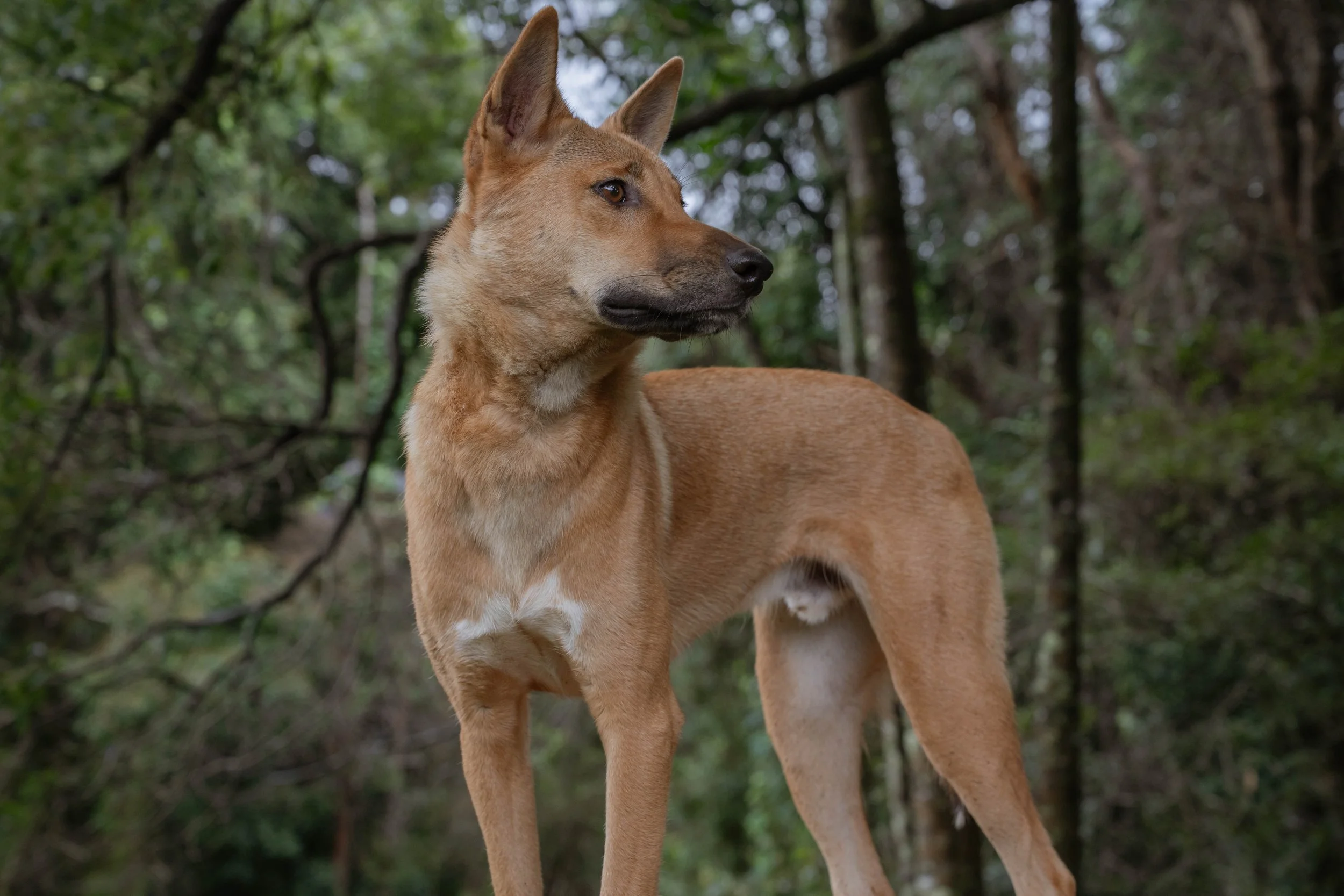
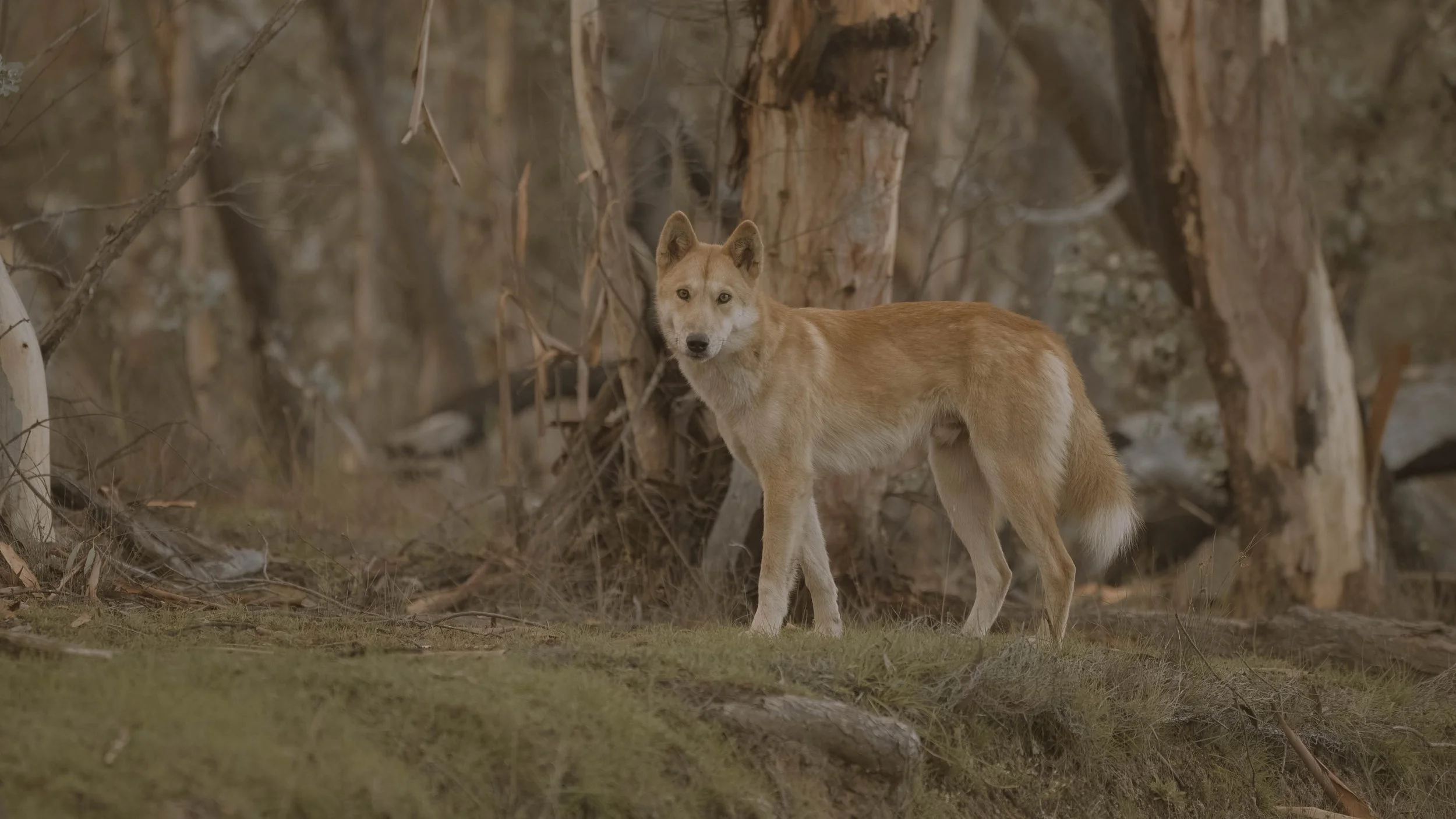
Submission Guide: Dingoes in National Parks in New South Wales.
The New South Wales Parliament has launched an Inquiry into Dingo management across the states National Parks.
Your voice matters. Let’s make this Inquiry count for dingoes.
An exciting opportunity to create change for dingoes across New South Wales National Parks.
The New South Wales Parliament has launched an Inquiry into the management of dingoes across the states National Parks. Defend the Wild and Dingo Culture welcome this process as an important opportunity to shape the future management of dingoes, and ensure their protection across the states public conservation areas.
Dingoes are the only native mammals specifically exempt from protection under the Biodiversity Conservation Act, allowing them to be trapped, poisoned and shot across New South Wales National Parks.
This submission guide is designed to support individuals and organisations to take part in this process. Whether you are a Cultural Custodian, scientist, conservationist, wildlife carer or member of the public, your participation can help shape the future of dingo management positively.
How does an Inquiry work?
The Inquiry is structured around a set of Terms of Reference (ToR), which define its scope and outline the specific issues the Animal Welfare Committee is considering. Submissions can address one or multiple terms of reference, depending on the issues you wish to raise.
Below you can find a brief explanation of each Terms of Reference item, along with example issues, evidence, and areas of concern that may help inform your submission.
Let the Animal Welfare committee know what recommendations you would like to see come out of this process.
Submissions will close 17 July 2026, at which point the Animal Welfare Committee will consider all evidence provided in submissions. Then, public hearings will take place to allow an opportunity for the committee to examine key witnesses. At the conclusion of the inquiry, the committee will publish a final report with recommendations surrounding the issue. Below are some recommendations you may wish see included in the final report at the conclusions of the inquiry. If you scroll on, you will find details around each Term of Reference to support these recommendations:
An end to dingo killing within New South Wales National Parks to protect the ecological function of dingoes and support biodiversity conservation.
Greater involvement of Cultural Custodians in decision-making and place-based management regarding dingoes in National Parks to ensure the cultural significance of dingoes is reflected in legislation and management.
Financial support and extension services for landholders surrounding National Parks to implement non-lethal coexistence strategies, ensuring their interests are protected and dingoes can be maintained in the environment.
The Animal Welfare Committee inquire into and report on the treatment and the cultural and ecological significance of dingoes in national parks in New South Wales, and in particular:
(a) the genetic status of dingoes, the distinction between dingoes and dogs and recent research into the genetic profile of NSW dingoes
Submissions could examine recent developments in dingo genetics research and how current management frameworks do not reflect contemporary science. Contributors may wish to discuss hybridisation, ecological function, the impact of lethal control on dingo family stability, and the distinction between dingoes and domestic dogs.
Current dingo management policies are largely based on outdated genetic research using only 23 genetic markers. Contemporary studies now use up to 195,000 markers and indicate that overwhelmingly, Australia’s wild-living canids are dingoes, with hybridisation relatively uncommon in stable, undisturbed populations. In New South Wales, more than three-quarters of sampled wild canids showed over 93% contemporary dingo ancestry.
Research indicates that lethal control methods such as poisoning, trapping and shooting can disrupt stable dingo pack structures, increasing social instability and the likelihood of interbreeding with domestic dogs. Modern conservation science increasingly recognises that ecological function - including the role of dingoes as apex predators - is an important consideration alongside genetics when assessing wildlife populations.
Dingoes differ from domestic dogs in several important ways, including their ecological role, social structure, breeding patterns, and behaviour. Australia does not have an established continent-wide population of feral domestic dogs living independently across ecosystems, and it is now widely understood that the wild canids occupying these landscapes are dingoes performing important ecological functions.
-
Earlier genetic research on Australia’s wild canids relied on only 23 genetic markers and heavily influenced many dingo management policies that remain in place today.
Contemporary genetic research now uses thousands of markers and has significantly changed scientific understanding of wild canids in Australia.
Recent studies indicate that overwhelmingly, wild-living canids in Australia are dingoes, with recent interbreeding between dingoes and domestic dogs considered uncommon.
A 2023 genetic analysis of 307 wild canid samples across Australia found no evidence of free-living domestic dogs or active dingo-dog hybrid populations.
In New South Wales, 103 wild canid samples were analysed, with more than three-quarters showing over 93% contemporary dingo ancestry.
Research suggests that traces of domestic dog ancestry in wild dingo populations are often the result of historic rather than recent interbreeding events.
Dingoes with low to moderate levels of dog ancestry still retain the ecological traits and ecosystem function of dingoes, including their role as apex predators.
Poisoning, trapping, and shooting can destabilise dingo family groups and territorial structure, potentially increasing the likelihood of breeding with domestic dogs.
Modern conservation science increasingly recognises ecological function alongside genetics when assessing wildlife populations and management approaches.
Australia does not have an established continent-wide population of feral domestic dogs independently occupying ecosystems across the landscape.
Debate around “genetic purity” has played a significant role in dingo management policy, despite evolving conservation science increasingly recognising the importance of ecological function and population stability.
Dingoes and domestic dogs differ in several key respects, including:
ecological role (apex predator in Australian ecosystems versus human-associated domestic species)
social structure (stable, family-based packs versus more opportunistic groupings in domestic dogs)
breeding patterns (typically annual breeding in dingoes versus multiple breeding cycles in domestic dogs)
behaviour and ecology (cooperative hunting, territoriality and wild-adapted behaviours in dingoes)
(b) the legislative, regulatory and policy frameworks governing the management of dingoes in New South Wales in national parks
Submissions could examine how dingoes are classified and managed under existing legislation and policy frameworks in New South Wales, including whether current approaches appropriately recognise dingoes as ecologically important wildlife.
In New South Wales, the term “wild dog” is an umbrella term used to collectively refer to dingoes, domestic dogs and hybrids. There is no distinction between roaming or stray dogs and dingoes under current legislation.
Dingoes are the only native mammal specifically exempt from protections under the Biodiversity Conservation Act 2016, allowing lethal control across National Parks.
Dingoes (under the term ‘wild dog’) are classified as priority pest animals under Regional Strategic Pest Animal Management Plans developed by Local Land Services.
The NSW National Parks and Wildlife Service undertake dingo (‘wild-dog’) control on public conservation land in order to meet its ‘General Biosecurity Duty’ under the Biosecurity Act 2015 to manage pest animals, and align with the priorities set out in the New South Wales Wild Dog Management Strategy.
Information obtained under the Government Information (Public Access) Act 2009 revealed that more than 1.5 million 1080 poison baits targeting dingoes were deployed by New South Wales Parks and Wildlife Service (NPWS) between 2020 and 2025.
Current policy settings continue to manage dingoes within broad pest management frameworks despite contemporary ecological and genetic research recognising dingoes as an ecologically important native species.
(c) the ecological role of dingoes in National Parks
Submissions could explore the ecological importance of dingoes as apex predators and their role in maintaining healthy ecosystems within National Parks.
Dingoes are Australia’s only native canid and are recognised as an important apex predator and keystone species.
Dingoes regulate populations of kangaroos and wallabies, reducing grazing pressure on landscapes.
Dingoes eradicate introduced goats, reducing pressure on vegetation.
Dingoes suppress, and in some cases eradicate, foxes through territorial competition and predation easing pressure on smaller native wildlife.
Dingoes suppress introduced cats through territorial competition and predation easing pressure on smaller native wildlife.
Research suggests that stable dingo populations may suppress fox populations more effectively than poison baiting programs alone.
Dingoes also contribute to the suppression of pigs, reducing pressure on landscapes.
The presence of dingoes influences the behaviour and movement of herbivores and other animals, reducing pressure on vegetation communities.
The removal of apex predators can destabilise ecosystems, contributing to vegetation decline, habitat degradation and increased pressure on threatened species.
(d) the cultural significance of dingoes for First Nations communities
Submissions could highlight the cultural importance of dingoes to First Nations communities, including their role in lore, kinship, Songlines, storytelling and Caring for Country practices. It is important here to be supportive of Cultural Custodians and their connection to dingo, but not to speak on their behalf. You may wish to reference the National First Nations Dingo Declaration, which was written by Traditional Owners and outlines a strong cultural perspective on dingoes.
Dingoes hold deep cultural significance for many Cultural Custodians across New South Wales and the wider continent.
Dingoes are connected to stories, dance, art, lore, kinship systems and cultural responsibilities to Country.
Many Cultural Custodians consider dingoes to be protectors, teachers and part of healthy Country.
The 2023 First Nations Dingo Forum brought together 100 Traditional Owners from 20 nations across Australia and led to the development of the National First Nations Dingo Declaration.
The declaration calls for a new approach centred around “Caring for Dingoes on Country” and greater involvement of Cultural Custodians in dingo management.
Oral histories and archaeological research show that Cultural Custodians buried companion dingoes, with evidence that these animals were given intentional burials consistent with ancestral or ceremonial practices.
In partnership with Dingo Culture we have developed a guide to assist Cultural Custodians to make a submission on the cultural significance of dingoes to the Inquiry.
(e) the impact of current government policies and programs for the management of dingoes in National Parks
Submissions could examine the ecological, genetic, cultural and animal welfare impacts associated with current dingo management programs in New South Wales National Parks.
Current management programs relies on lethal control methods including 1080 poison baiting, trapping and shooting.
Lethal control can disrupt stable dingo family groups and pack structures.
Disruption of dingo family structures may increase the likelihood of dingoes breeding with domestic dogs.
Removal of dingoes causes tropic cascade.
Removal of dingoes from ecosystems leads to increases in introduced predators and herbivore pressure.
Trapping of dingoes raises serious welfare concerns for the time the animal remains in the trap, unable to access food, water or shelter.
Current management programs do not adequately reflect contemporary ecological science or cultural perspectives relating to dingoes.
Current management of dingoes in National Parks is largely focused on agricultural protection not biodiversity outcomes.
No funding is allocated for research and development into non-lethal coexistence strategies for agricultural properties neighbouring National Parks.
Many Cultural Custodians report feeling excluded from decisions relating to dingo management on their Country.
(f) dingo management including opportunities for incorporation of Indigenous knowledge and leadership in dingo conservation in national parks
Submissions could support opportunities for greater involvement of Cultural Custodians in dingo management and conservation across New South Wales National Parks.
First Nations peoples have cared for dingoes and Country for thousands of years, maintaining deep, ongoing relationships that continue to support healthy landscapes and biodiversity outcomes that benefit all Australians.
Indigenous knowledge systems hold detailed, place-based understanding of dingo behaviour, ecology, and their role in broader ecosystem function, complementing and strengthening western scientific approaches.
Across New South Wales, Indigenous ranger groups are increasingly leading monitoring and management programs for dingoes on Country, providing important on-ground insights into populations and behaviour.
This leadership is particularly significant given existing gaps in comprehensive, statewide data on wild dingo populations.
Cultural Custodians are increasingly advocating for Indigenous-led approaches to dingo conservation and management, including expanded roles in National Park governance and decision-making.
Strengthening the role of Cultural Custodians in decision-making processes would improve cultural, ecological, and conservation outcomes, with flow-on benefits for ecosystem health and biodiversity.
Co-management approaches offer a practical framework to integrate Indigenous knowledge systems with western science in National Parks management, improving both governance and on-ground effectiveness.
The principles outlined in the National First Nations Dingo Declaration provide a relevant foundation to inform future policy development and support more inclusive and effective dingo management approaches.
(g) any other related matters.
Your submission could discuss how changes to dingo management within National Parks may create concern or uncertainty for neighbouring landholders in relation to predation on farmed animals, and consider how the Government could support the development, accessibility, and broader adoption of effective non-lethal predator deterrents.
Longstanding lethal control measures have not eliminated the risk of predation on farmed animals, with some studies finding broad-scale 1080 baiting of dingoes could exacerbate the risk of predation on calves.
There is currently no extension services to support landholders to implement non-lethal predator deterrent strategies in New South Wales. Funding currently utilised for broad-scale 1080 baiting of dingoes and trapping and shooting in National Parks could be re-directed to support neighbouring landholders with coexistence extension services.
Livestock Guardian Dogs have been proven effective at reducing or eliminating predation on livestock by dingoes. They also provide other benefits to landholders including deterring macropods (kangaroos and wallabies) from grazing paddocks, protection from foxes and protection from birds of prey.
There is widespread anecdotal evidence from landholders that donkeys are effective guardians against canid predators. There is a strong opportunity for the New South Wales Government to support more robust trials into the use of livestock guardian donkeys to support properties neighbouring National Parks.
Investment is needed into research, development and scaling of coexistence strategies in New South Wales that ensures landholder interests are protected and dingoes can be retained in the environment to play their important ecological role.
Ready to submit?
A submission is your opportunity to provide the Committee with your views, experiences, evidence, and recommendations relating to the inquiry. Submissions can be short or detailed and may address all, or just one, of the Terms of Reference. They can be lodged through the online submission portal.
This inquiry provides an important opportunity to examine how dingoes are managed in New South Wales National Parks, including whether current policies reflect contemporary science, ecological knowledge, animal welfare considerations, and the cultural significance of dingoes. Contributions from researchers, Traditional Owners, wildlife carers, conservation groups, landholders, and community members can all help inform the Committee’s understanding of these issues.
A submission should briefly introduce who you are, where you are based, and why the inquiry matters to you. Focus on the areas most relevant to your experience or expertise and, where possible, structure your points around the Terms of Reference. Clear examples, research, lived experience, or other supporting evidence can help strengthen your submission.
You may also wish to include practical recommendations or reforms you would like the Committee to consider. Finish with a short summary of your key points, along with your name, organisation (if relevant), and the date.
Even brief submissions are valuable and help demonstrate the level of public interest in dingo management and conservation in NSW.